ABOUT CMA
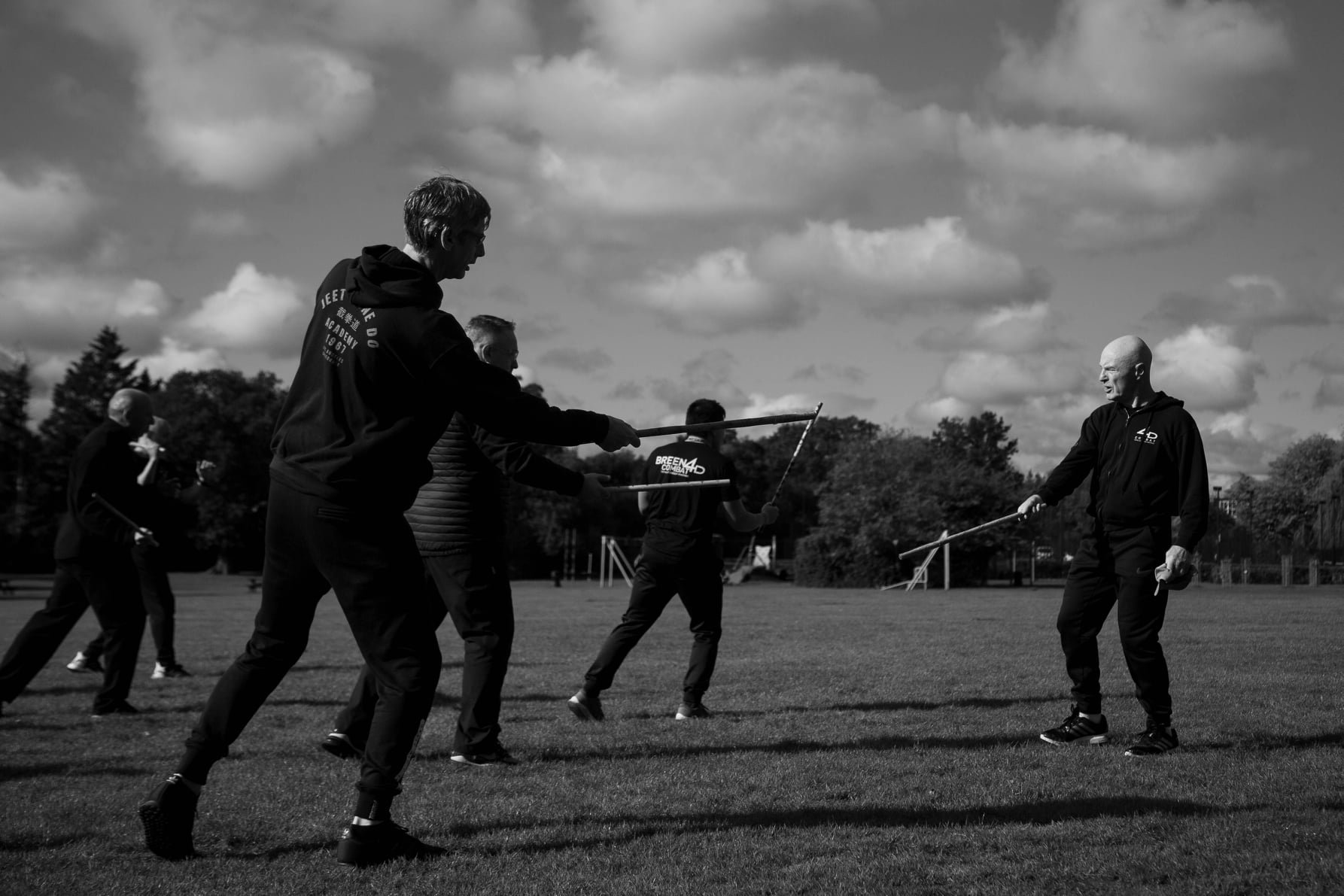
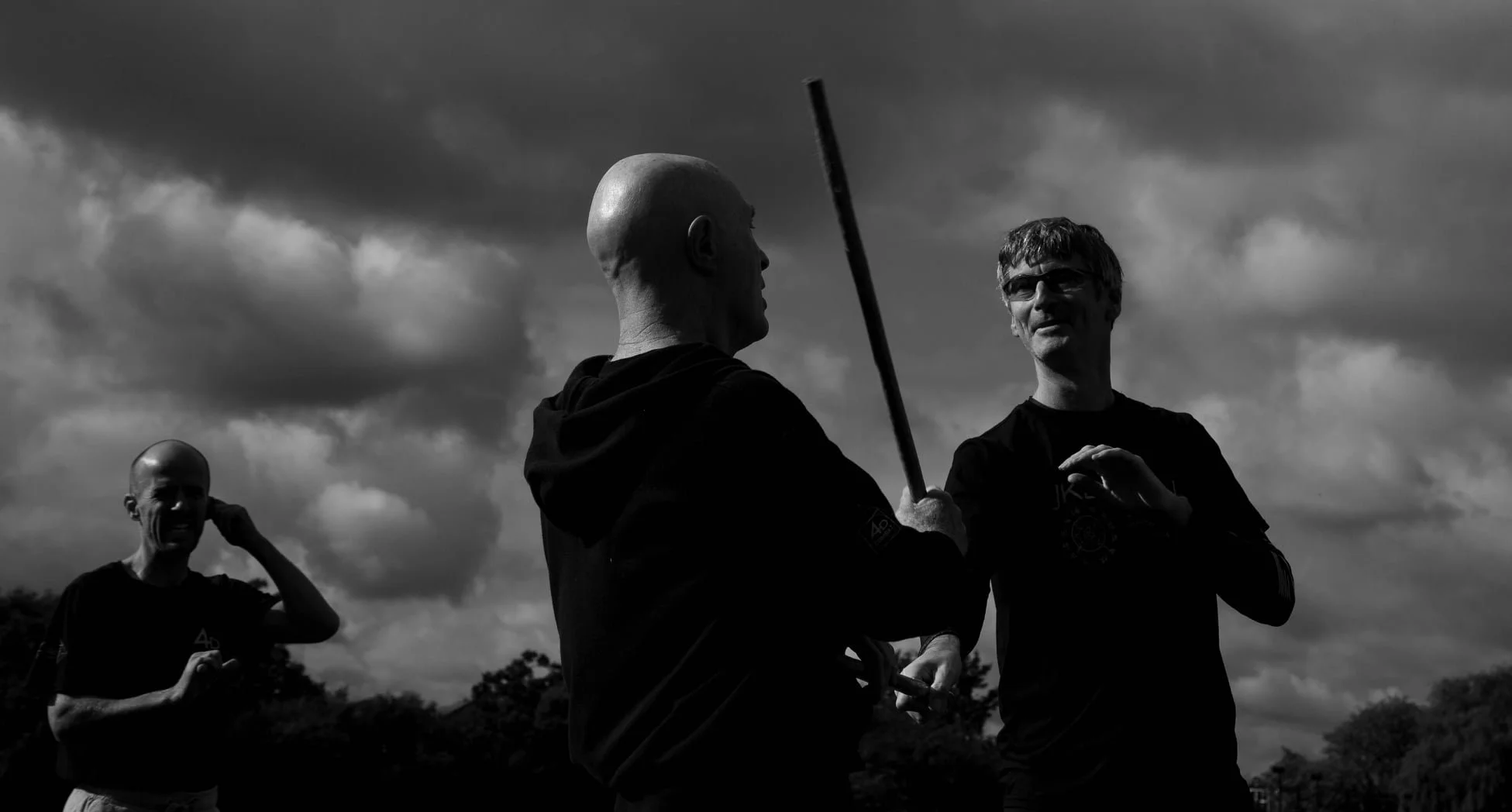
CMA is what’s known as a ‘Lifestyle’ club. There are no egos, it’s super friendly, and the focus is on empowerment and inclusivity, regardless of training goals. Some students have fought in the ring and it’s an option for you, but most are just training to keep fit and safe and learn some cool stuff. You can choose whether to focus on combat sports (boxing, kickboxing, a little MMA) or the beautiful, yet deadly Asian material. Filipino Kali is a battlefield art and as such can include the use of weapons and multiple attackers. Occasionally, we also train what’s known as ‘Combatives’. This is where ‘real world self-defence’ edges toward a military approach, while also covering legal implications. Add some awareness skills and a bit of verbal de-escalation, and you and your family will be a lot safer.
Each martial art has its own strengths and weaknesses, so we need to adapt our actions based on the situation/environment/level of threat etc. With that in mind, some of the material is just for the boxing ring, some is for the kickboxing ring, some is for the cage, some is for outside the kebab shop, and some (weapons training) is for a Zombie Apocalypse scenario 😊. The choice is yours.
Despite the study of violence, we have an amazing sense of community and mutual support. We should all be caring, polite, productive members of society… but why not train like John Wick as well?
We try to keep lessons informal and fun. We laugh a lot, there’s no dress code, and we play music (we are CAMDEN Martial Arts, after all!). All in the spirit of personal development, we aim to make you a happier, fitter, stronger, more functional human being. You’ll learn not just how to punch and kick, but also strategies on how to avoid confrontation in the first place. You’ll feel less stressed and you’ll meet some nice people as we all improve together.
Interested by the martial arts but not sure if it’s for you? Come for a couple of free trial lessons and find out.
Meet the Chief Instructor: Julian
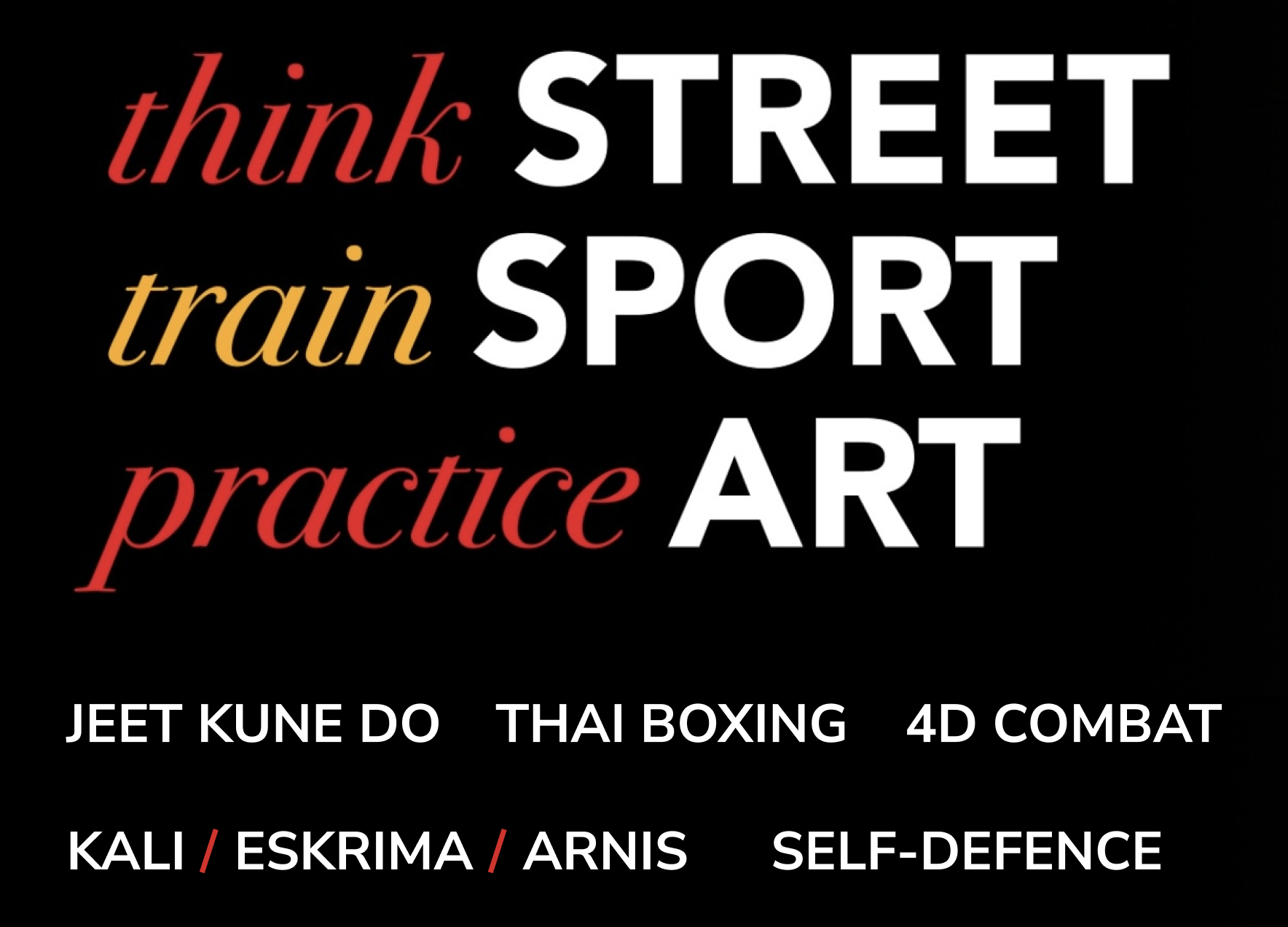
At the age of 30, I was attacked by a couple of guys in South London in 1999 and decided I should learn how to defend myself, if needed. I did a few Muay Thai lessons, then had a near-fatal accident which left me bedridden for months. While soul-searching I made some big life changes and decided I needed to take my health more seriously. I was really enjoying martial arts training, so I decided to delve deeper and I had the good fortune to find the Bob Breen Academy. Over twenty years later, every aspect of my life has improved.
Guro Bob is a legend in the arts, he captained the first karate team ever to beat the Japanese back in 1974, and he has been at the vanguard of the European martial arts scene ever since. He hosted Bruce Lee’s training partner, Guro Dan Inosanto in 1979 which was a European first, and these days he remains at the cutting edge of the martial arts world with his amazing 4D Combat system: JKD simplified. A black belt since 2011, I now also have the great honour of being an affiliate 4D Combat instructor under Bob.
Bob has trained many world champions and even a superhero or two. My martial arts training has also led to me doing some stunt work and movie fight coordination. It’s amazing where your journey can take you.
Over the years I’ve also travelled to Thailand to train Muay Thai a few times, and for the last few years I’ve been taking students to seminars in Italy to train with Dan Inosanto. I am on his instructor program and certified to teach Jeet Kune Do, Jun Fan Gung Fu and the Filipino Martial Arts. This officially makes me a Second Generation JKD instructor, direct under Bruce Lee’s top student, which is an immense honour.
I’ve fought in the ring (K1 kickboxing rules) although not as a pro, and I’ve had a couple of competitive stickfighting bouts, but I consider myself much more of a teacher then a fighter. I LOVE teaching beginners as the learning curve is so steep, they have no ingrained bad habits, and I can usually take people from baseline to fairly functional in a matter of months if they train regularly.
I get immense satisfaction from seeing the progress in my students. Obviously that applies to their physical skillset and fitness, but I also see changes in confidence and other benefits. That’s why I love teaching.
What is Jeet Kune Do (JKD)?
Jeet Kune Do is not a martial arts system or style, but rather a philosophical approach to combat and self-development, originated by Bruce Lee in 1967.
As a young man, Bruce Lee trained traditional Wing Chun Gung Fu training in Hong Kong under Ip Man. Fighting was getting him into trouble, so his father sent him to the US. He had always been told that Wing Chun was the best fighting system and that it could beat any other style. A small, half-Chinese man in a less enlightened age meant he was subjected to some racism, but he was never one to back down and found his ability to fight was tested often. He discovered that his Wing Chun was very useful, but sometimes a little limited when fighting against a wide variety of alternative systems - many Americans practiced western boxing and many wrestle to a high level in college.
Bruce Lee’s Chinese name was Lee Jun Fan, and at first he developed his own fighting style: ‘Jun Fan Gung Fu’. This has specific moves, combos and a syllabus, and often looks more like kickboxing than traditional Wing Chun Gung Fu. A natural philosopher, his experiences eventually led him to the conclusion that fighting style should actually be a function of personal development, rather than trying to slot yourself into some else’s moves and techniques. Some techniques work for tall slim people that don’t work for short stocky people and vice versa, so there was no ultimate system that was going to defeat all of the people, all of the time… ‘It’s the artist, not the art’.
Training in various arts was frowned upon by most Asian practitioners back then, but Sigung Bruce pioneered an ‘absorb what is useful, reject what is useless’ mindset which encouraged cross-training, and he borrowed from boxing, fencing and savate and others. There is also a significant focus on efficiency and simplicity eg. ‘closest weapon to closest target’.
Bruce Lee taught all his private students differently, according to their strengths and weaknesses. Chief Instructor Julian is a certified JKD instructor under Dan Inosanto (Bruce Lee’s close friend and the most senior JKD person in the world). Sifu Ted Wong (now sadly deceased) was also one of Bruce Lee’s other top students. Julian has also studied privately under a Full Instructor under Ted Wong.
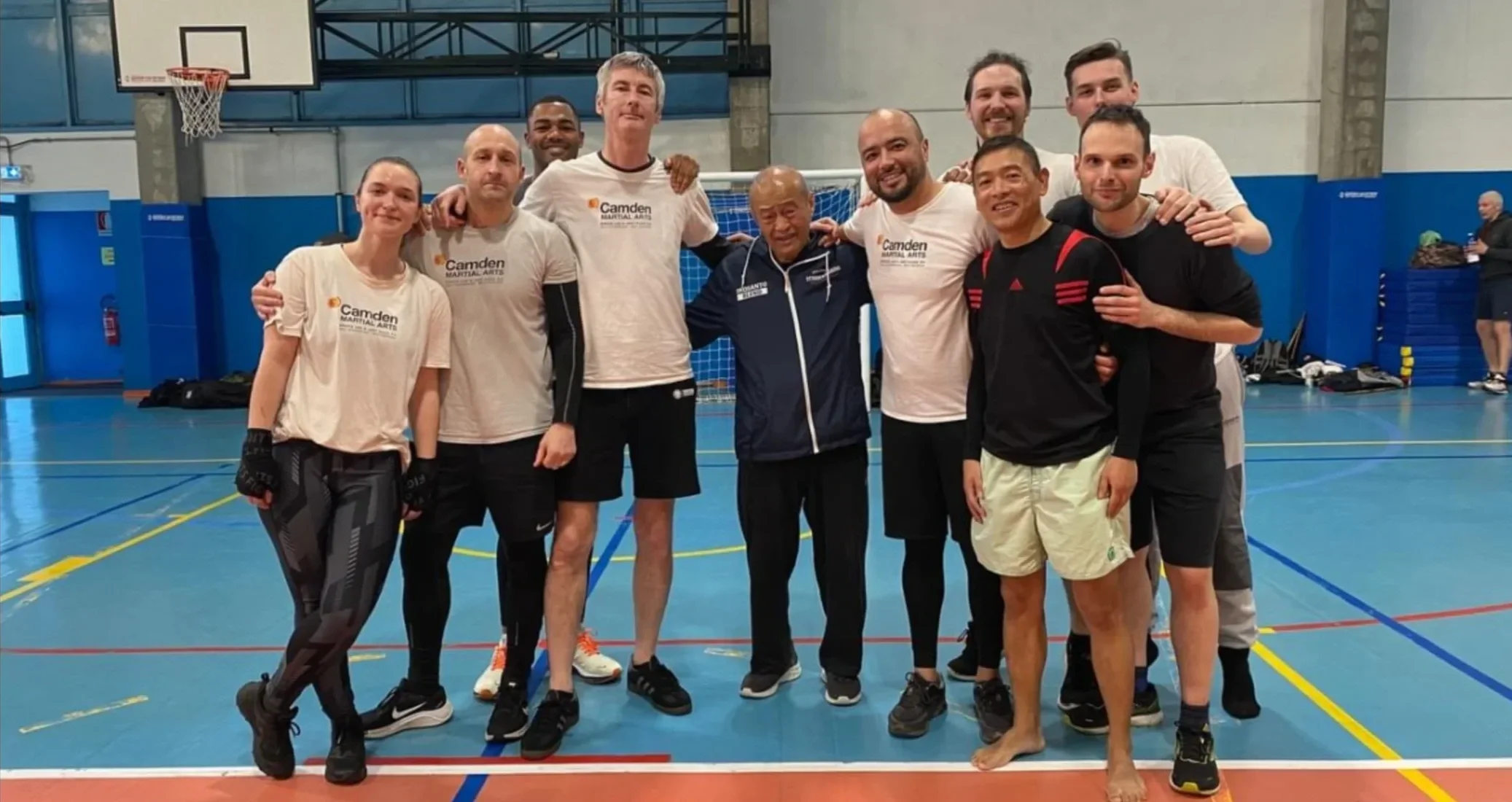
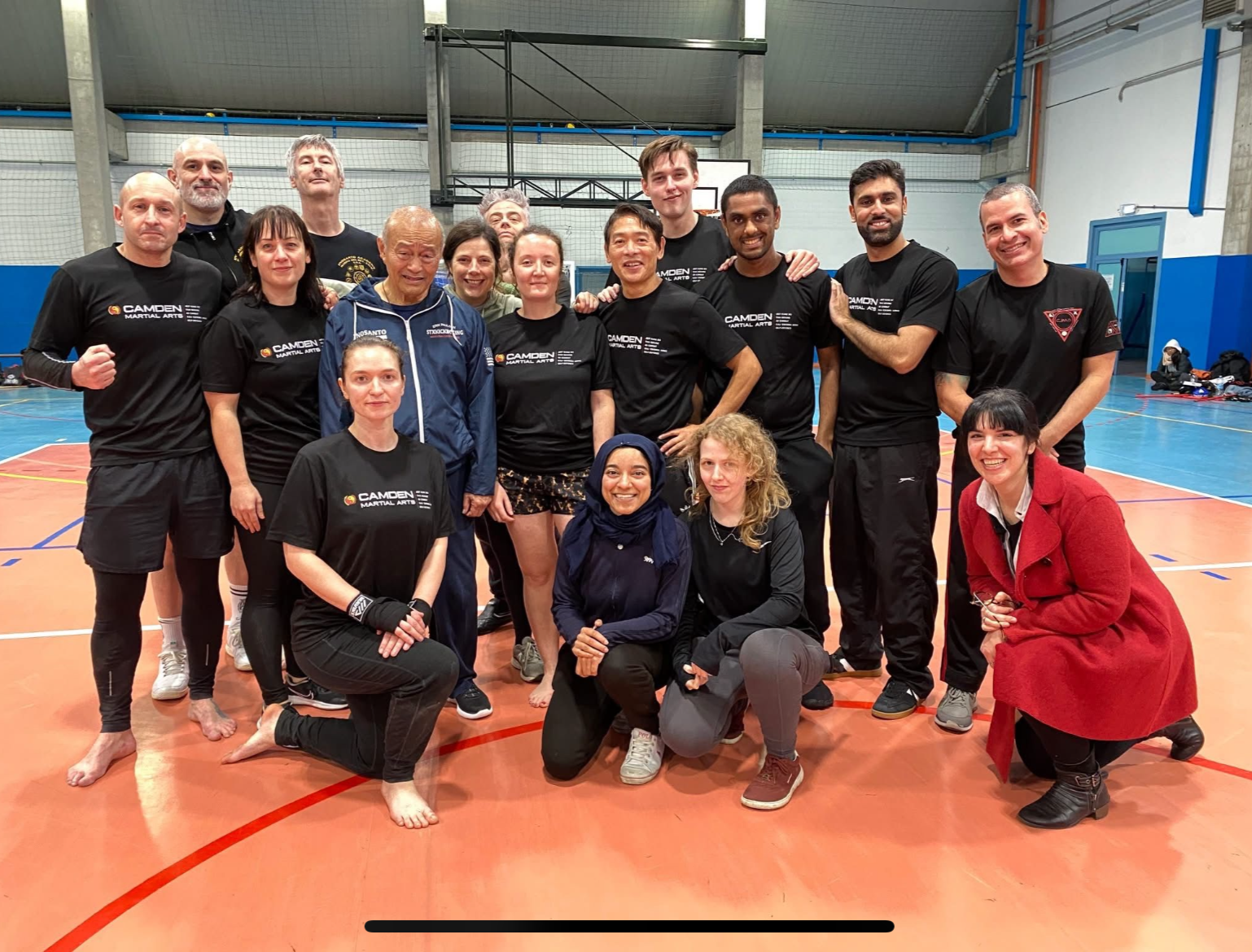
CMA team trips to Italy, to train with Bruce Lee’s most senior student, the legend himself: Guro Dan Inosanto:
“Be like water making its way through cracks. Do not be assertive, but adjust to the object, and you shall find a way around or through it. If nothing within you stays rigid, outward things will disclose themselves… Empty your mind, be formless. Shapeless, like water. If you put water into a cup, it becomes the cup. You put water into a bottle and it becomes the bottle. You put it in a teapot, it becomes the teapot. Now, water can flow or it can crash. Be water, my friend.” - Bruce Lee
What is Muay Thai Kickboxing?
Muay Thai is the devastating Thai kickboxing art that is also known as the Art or Science of ‘Eight Limbs’ as it combines punching and kicking with elbows and knees. Renowned as a striking art, it also has highly evolved clinch/stand up wrestling aspects. It can be brutal, yet beautiful, and many argue it is the most evolved striking art in the world. It has variations, such as K1 which doesn’t allow elbows, and we also train Dutch Kickboxing, which originated from blending pure Thai with Kyokushin Karate.
I trained pure Thai for many years under the late, great Winston Fraser who was twice European champion. I’ve also travelled to Thailand three times, to train. Tiger Muay Thai in Phuket is world famous and frequented by fighters from the UFC and ONE Championship. I’ve also trained at SuperPro on Koh Samui. I’ve always just loved the training and never had the hunger to compete much, but I did fight in the ring (K1 rules), aged 53, just to tick the box. I’ve now retired, undefeated. Ha!
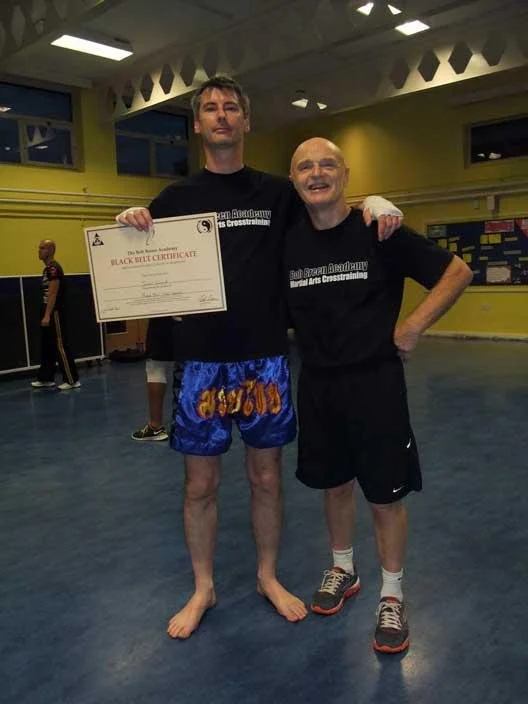
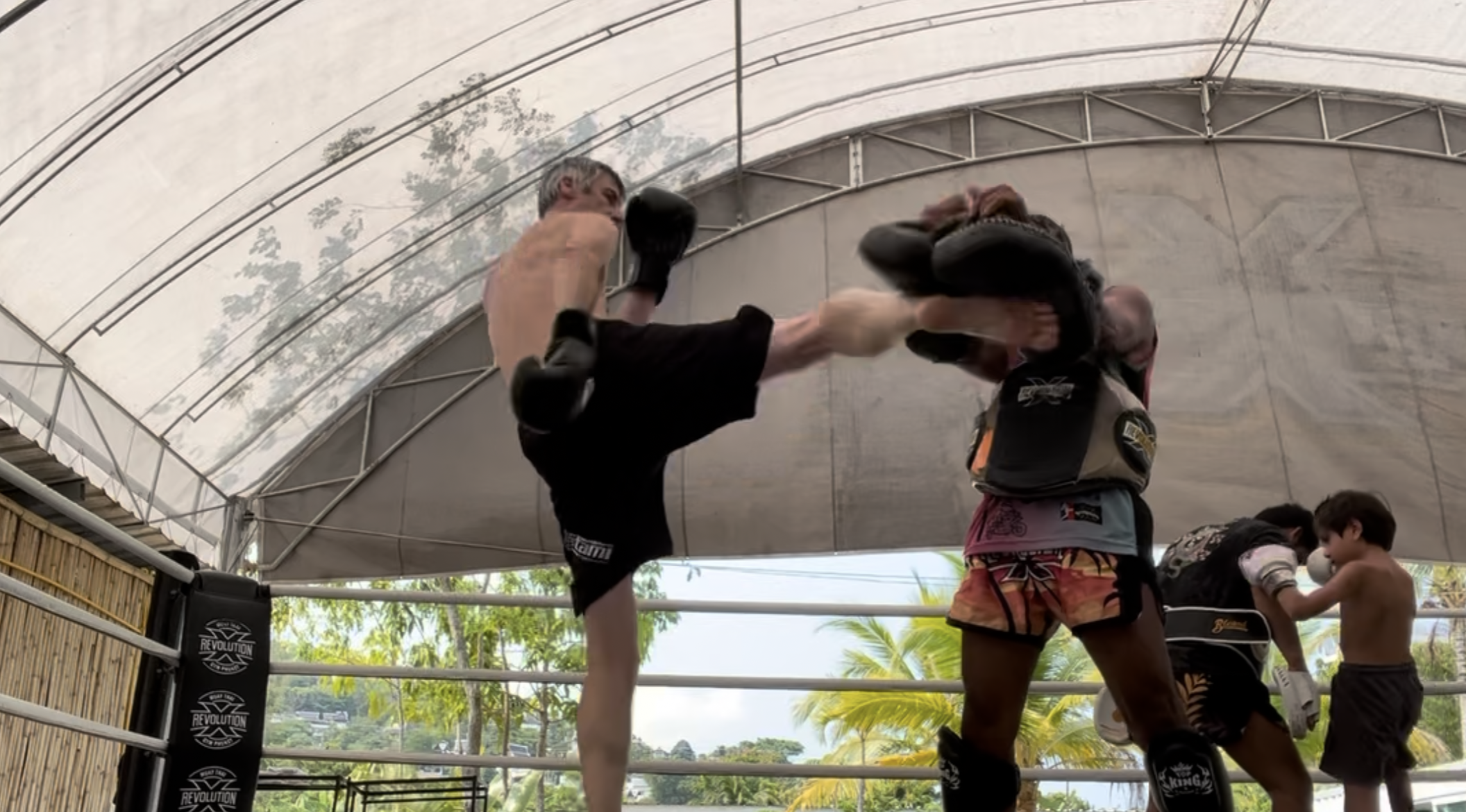
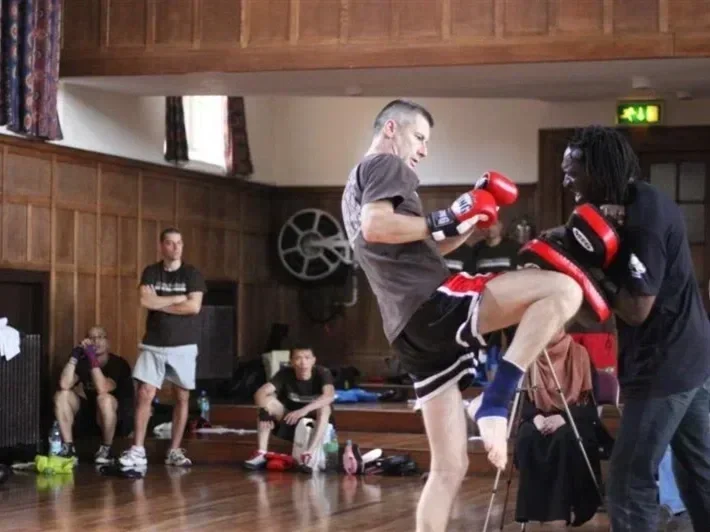
Here's me at my black belt test with my Muay Thai instructor and twice European Champion: Winston Fraser, and taking a private lessons at REVOLUTION Gym in Phuket, Thailand.
What is 4D-Combat?
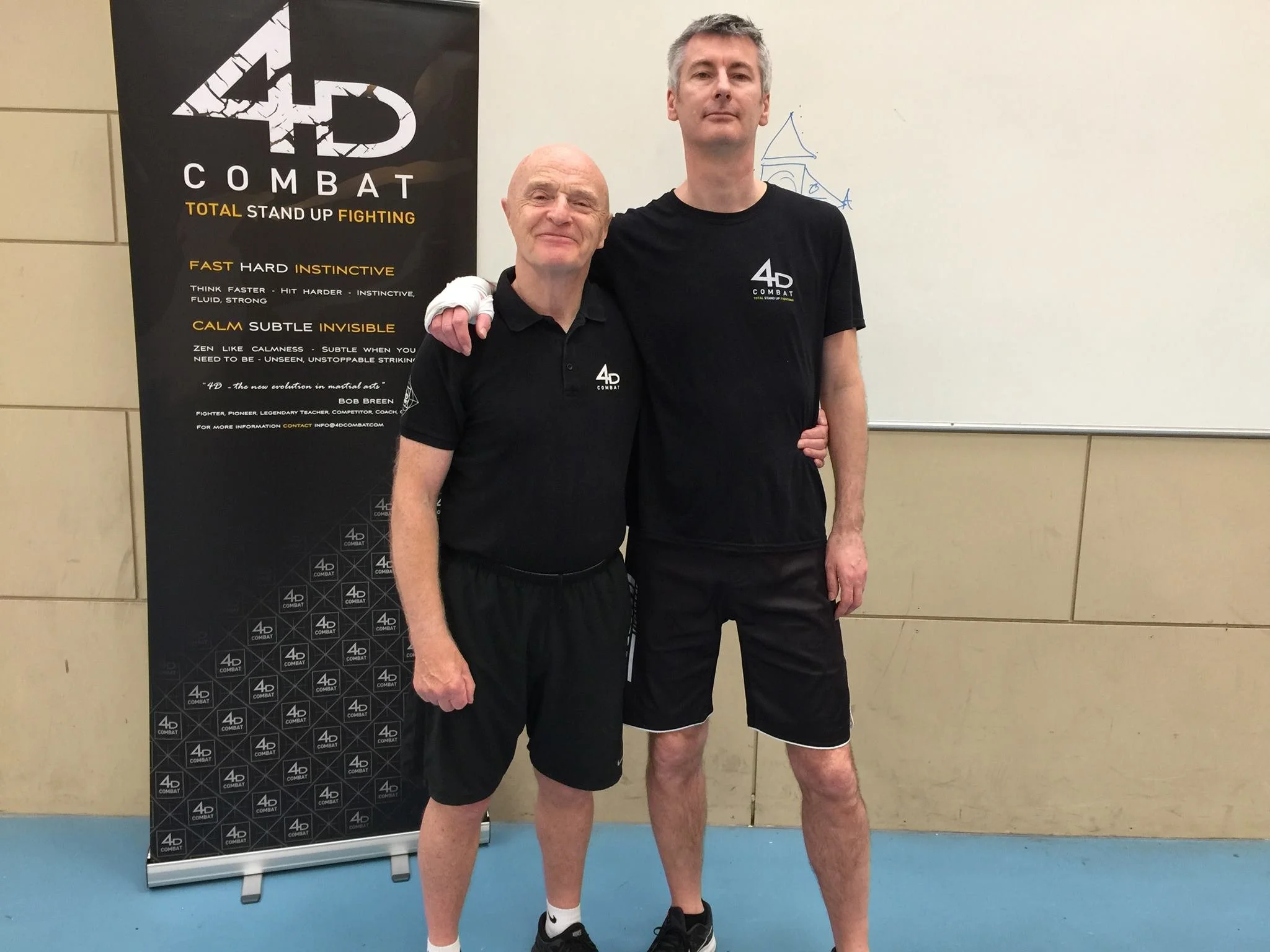
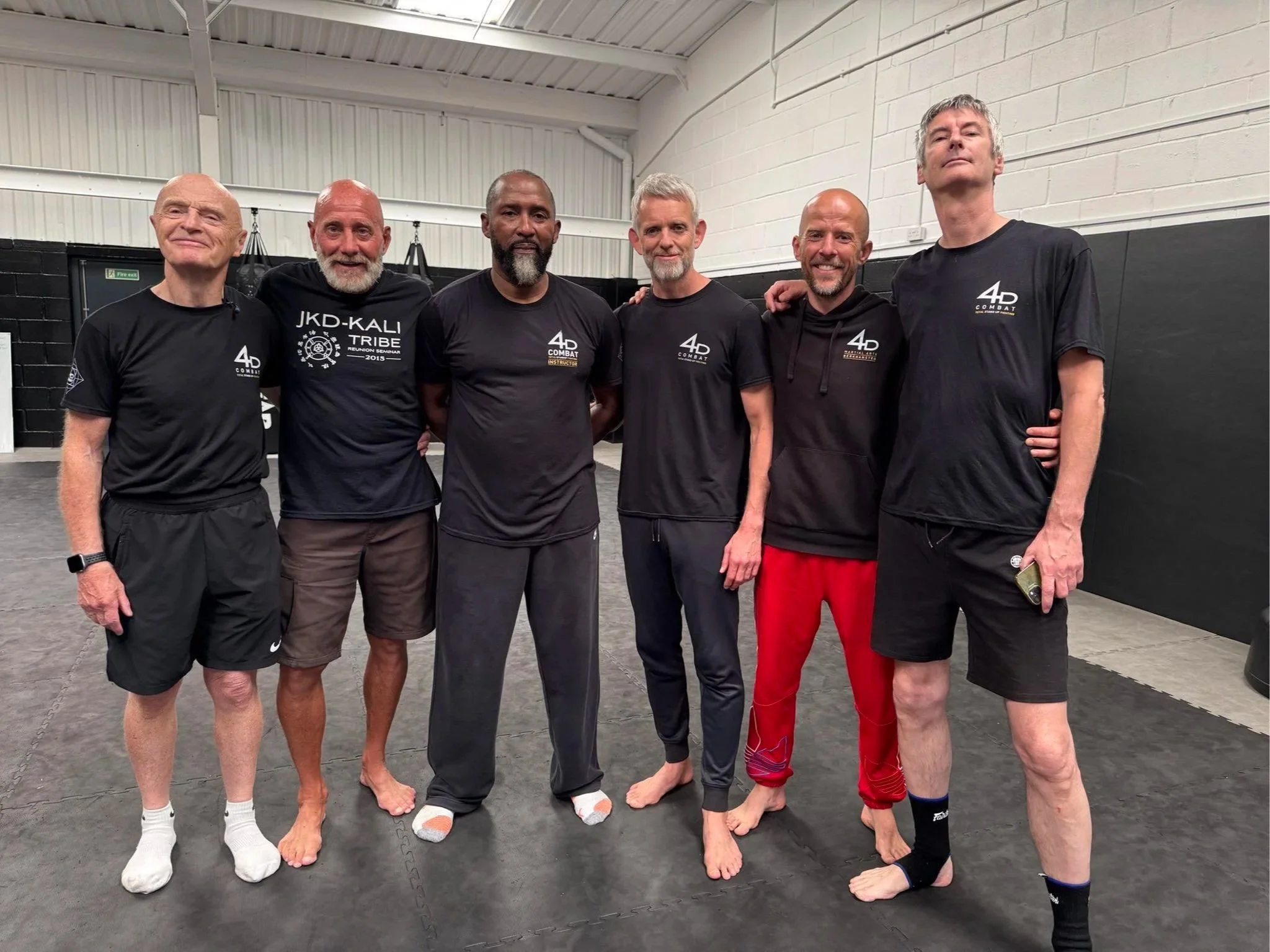
4D Combat is a system developed by my main teacher and mentor over the last 25 years, Guro Bob Breen. It aims to unite the best bits of JKD and Filipino Kali while making it all far more intuitive.
With over 50 years' experience at the highest level, Bob is a legend in the arts. He captained the first karate team ever to beat the Japanese back in 1974, and hosted Dan Inosanto in 1979, so is now considered the Godfather of JKD Europe. He also captained the British stickfighting team in the World Championships in the Philippines in the late 80s and early 90s, and has trained several world champions, so is also a world class Kali practitioner and teacher.
Bob wanted to create a simpler model; something that would work for normal people yet have all the depth of the arts from which it was derived. Thus we have his amazing 4D Combat system. The name came about as the system comprises the four dimensions of stand up combat: Striking, Clinching, weapons, and group attack.
After 25 years of training directly under Bob, and earning my black belt in 2011, I now also have the great honour of being an affiliate 4D Combat instructor. Bob but doesn’t run his full time academy any more, but still teaches regular seminars and I regularly train with him in small invite-only groups.
What is Filipino Kali/Eskrima/Arnis?
Kali is predominantly a weapons-based system from the Philippines (the terms Kali, Arnis and Eskrima are more or less interchangeable, it just depends on whereabouts in the Philippines they are taught). It was actually Dan Inosanto (a Filipino American) who taught Bruce Lee how to use nunchuks, and the Filipino arts remain an enormous influence on the way Jeet Kune Do is taught and practiced. This is largely due to the flow developed from their weapons training. A national pastime since the occupying Spanish banned swords, stickfighting has been a tradition in the Philippines for hundreds of years.
Kali also has fantastic empty hand elements, and if you want to know what it looks like, check out Jason Bourne in the first three Bourne films, the fight coordinator was Jeff Imada (a Dan Inosanto student).
The knife defence we do is also rooted in kali, and augments our understanding of space and movement.
Weapons classes are more beginner-friendly than they sound, and they accelerate your understanding of distance and angles, in a way that significantly improves your ‘empty hand’ training.